Product links below are ordinary Amazon links. This article does not currently earn affiliate commissions.
Specs checked October 8, 2026.
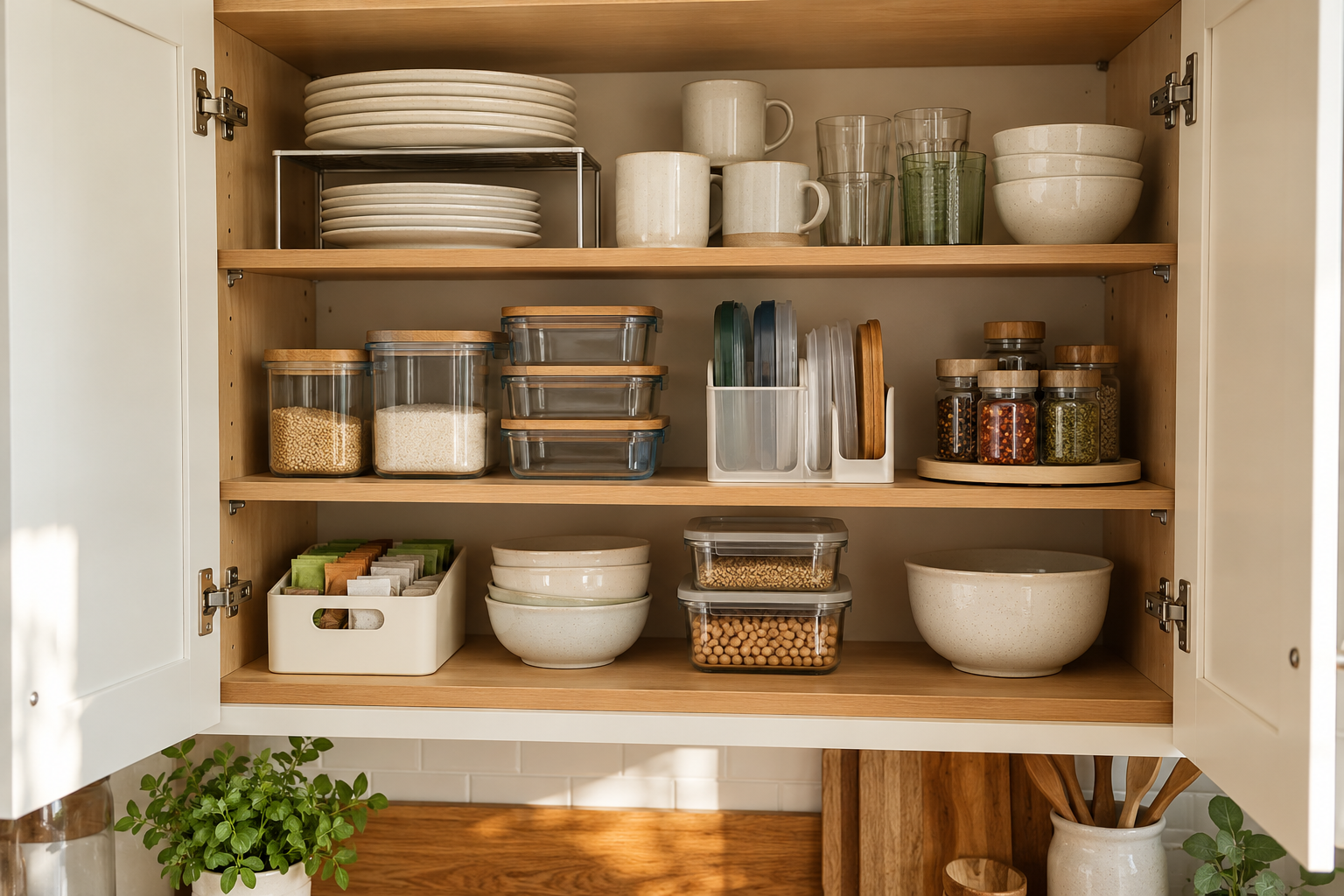
The most useful small kitchen cupboard storage ideas separate crowded stacks and make everyday items easier to reach. Measure your usable space, then choose one change: a second level for dishes, upright storage for lids, or a removable bin for small items.
You can try seven of the ideas below with existing cupboard shelves, containers and suitable holders. Four include optional Amazon organizers, with measurements to help you decide whether they fit.
What You’ll Need
- A measuring tape and a cloth for cleaning the shelf.
- Any useful bins, dividers or food-storage containers you already own.
- A short list of what belongs in this cupboard.
Before You Start: Clear One Shelf and Measure It
Give yourself ten minutes to empty one shelf, wipe it down and group similar items. Match containers with their lids, move unrelated items elsewhere and set aside duplicates you no longer need.
Measure the space you can actually use
- Width: measure between obstructions, including hinges and the cupboard frame.
- Depth: measure from the back to the closed door’s inside face.
- Height: measure from this shelf to the underside of the shelf above.
Also check the opening a bin must pass through. An organizer may fit inside the cupboard and still be awkward to remove.
Outside dimensions describe the empty organizer. Allow additional room for dishes, upright lids, packets, bottle tops and your hand.
For door storage, check door thickness, the gap above the door and the closing path. An over-door bracket or loaded basket must clear shelves and hinges; follow its instructions and your rental agreement before installing anything.
Compare the four optional organizers
Sizes below are width × depth × height in inches. Check the specific variant at Amazon; listings and availability can change.
| Product | Best for | Outside size | Link |
|---|---|---|---|
| SONGMICS UKCS01SV shelf risers | Short dish stacks | Larger shelf: 12.6 × 9 × 6.1 in | Check current price at Amazon |
| OXO 11-inch Turntable | Frequently used bottles | 11 × 11 × 1.5 in | Check current price at Amazon |
| YouCopia ShelfBin Packet | Small packets | 6.5 × 10.7 × 5.2 in | Check current price at Amazon |
| YouCopia StoraLid 24 | Food-container lids | 13.2 × 10.8 × 3.3 in | Check current price at Amazon |
Make Better Use of Shelf Height
1. Add a Shelf Riser Above Short Dish Stacks
A riser gives short stacks separate levels, so you can reach a bowl without lifting the plates above it. Try this where there is unused height above everyday dishes.
Optional organizer: SONGMICS Metal Shelf Risers
Fit Check — UKCS01SV, silver, set of two
- Larger shelf: 12.6 × 9 × 6.1 in / 32 × 22.9 × 15.4 cm.
- Smaller shelf: 12.6 × 8.6 × 5.4 in / 32 × 21.9 × 13.7 cm.
- Published load: 22 lb / 10 kg per shelf in the Amazon listing. Combined stacked limit and usable under-shelf clearance: not published.
- Setup: assembled metal shelves; freestanding, with separate, nested or stacked arrangements.
The manufacturer page confirms the larger dimensions; Amazon publishes the smaller shelf’s measurements and load limit. Compare either footprint with your dish cupboard.
Leave room above the riser for the dishes you plan to store. Follow the stacking instructions and the cupboard shelf’s own limit.
Best for: separating short dish stacks. Skip if: usable width is under 12.6 in or the loaded shelves will be too tall.
Check current price at Amazon2. Reposition Adjustable Cupboard Shelves
If your cupboard has adjustable shelves, group items by height before choosing a shelf position. Tall bottles need a different opening from short bowls or tea packets.
Empty the shelf before moving it and follow the cupboard’s instructions. Check that its supports are seated correctly, then test the tallest item and the space needed to remove it.
Renter note: use the existing adjustment system. Check permission before changing fixed shelves or making new holes.
3. Store Baking Trays and Cutting Boards Upright
Stand flat kitchen items in separate slots in a suitable holder you already own. You can then slide out one tray without lifting a pile.
Check the upright item’s height and the angle needed to pull it through the opening. Use a holder that supports the items; avoid balancing heavy trays loosely against the cupboard wall.
Separate the Things That Become Messy Piles
4. Give Food-Container Lids Their Own Divided Space
Keep matching containers nested together and give their lids a separate row. Dividers make it easier to find the right lid without spreading the collection across the counter.
Optional organizer: YouCopia StoraLid 24 Lid
Fit Check — Organizing Hero collection, 24 Lid variant
- Outside: 13.2 × 10.8 × 3.3 in / 33.5 × 27.4 × 8.4 cm.
- Lid guidance: up to 9 in / 22.9 cm wide; five adjustable dividers.
- Material and setup: BPA-free recycled plastic, speckled white; freestanding, no tools required.
- Not published: usable internal measurements and weight limit.
The handles let you bring the collection forward. Published dimensions and lid guidance come from YouCopia’s specifications.
Check clearance above the loaded lids, rather than relying on the empty base’s height. The product name does not establish how many of your particular lids will fit.
Best for: assorted food-container lids. Skip if: lids exceed the published size or the cupboard cannot accommodate the footprint.
Check current price at Amazon5. Store Pan Lids Beside Their Matching Pots
Keep cookware lids beside their matching pots. Food-container lid organizers may not accommodate pan lids and their handles.
If you already have a suitable pan-lid rack, space the lids so each handle clears the next one. Check the door’s closing path with the lids loaded; a holder’s empty depth tells only part of the story.
Without a rack, keep lids in their own accessible stack instead of beneath cookware.
6. Put Frequently Used Bottles on a Turntable
A turntable can bring bottles from the rear to the front. Use it for a small group you reach for often, such as oils or sauces stored according to their labels.
Optional organizer: OXO Good Grips 11-inch Turntable
Fit Check — model 1071352
- Outside: 11 × 11 × 1.5 in / 27.9 × 27.9 × 3.8 cm.
- Footprint: allow an unobstructed 11-inch circle within the usable shelf space.
- Setup: freestanding, fixed diameter, no drilling; non-slip feet and steel ball bearings.
- Weight limit: not published.
The OXO specification page confirms its size. The rotating surface sits inside the outer base, so treat that footprint as the space the organizer needs, rather than the usable bottle area.
Allow room to turn and lift the tallest bottle. A circular tray leaves corners around it; compare the layout with a rectangular bin.
Best for: frequently used bottles at the back. Skip if: usable width or depth is under 11 in.
Check current price at Amazon7. Gather Tea Bags and Small Packets in a Tiered Bin
Group small sachets by type so they stop disappearing between larger boxes. A tiered bin can make the rear packets easier to see.
Optional organizer: YouCopia ShelfBin Packet
Fit Check — four-tier Packet Organizer
- Outside: 6.5 × 10.7 × 5.2 in / 16.5 × 27.2 × 13.2 cm.
- Storage: four compartments with a stair-step layout and a carry handle.
- Material and setup: BPA-free recycled plastic, speckled white; freestanding, no assembly required.
- Not published: compartment measurements and weight limit.
YouCopia’s details confirm the dimensions and four compartments. Compare its width with gaps beside larger pantry items.
Packets can protrude above the bin, so check loaded height. Allow space to grip the handle and move it forward.
Best for: tea bags and small sachets. Skip if: usable depth is under 10.7 in or your packets need larger compartments.
Check current price at AmazonMake Crowded and Deep Cupboards Easier to Use
8. Use a Removable Bin for Items at the Back
Place related items in a bin you can bring forward together. This is useful when reaching one small item at the back means shifting several others.
Check that the bin passes through the cupboard opening and leaves room for your hand. Load it with a manageable group, then test whether you can remove it comfortably.
For a deep corner, use a removable bin only where its whole travel path stays accessible. Keep rarely used items farther back if retrieving them will always require extra steps.
9. Store Clean Dish Towels Upright in a Small Bin
Fold clean, dry dish towels into a small bin with their folded edges facing upward. You can select one without pulling it from the bottom of a stack.
Adjust the folds to the bin’s height and keep it on a reachable shelf, away from spill-prone bottles. Leave towels in a drawer if that arrangement already works.
10. Consolidate Small Items When Packaging Wastes Space
A large outer carton can take up space after most of its contents are gone. Group suitable individually wrapped packets in one existing container when their original storage instructions allow it.
Keep identifying labels, dates, allergen information and preparation instructions available. If you transfer food itself, use a container intended for food storage and follow the original product’s storage directions.
Compare the container with the original packaging before changing anything. A collection of bulky matching jars can use more shelf space than the bags and boxes it replaces.
11. Separate Everyday Items From Backstock
Give everyday essentials the easiest-to-reach positions and put spare supplies in a separate area. Keep one open package accessible before filling the front row with duplicates.
Label the backstock area by category, then check it before shopping. On a deep shelf, this arrangement gives the front and rear different jobs.
Common Cupboard Storage Mistakes
- Buying before measuring: include hinges, the frame and the closed door.
- Using empty height as loaded height: upright lids, bottles and packets need extra clearance.
- Filling every gap: leave room to grip, slide and lift items.
- Assuming added shelves double capacity: useful space depends on what you store and can access.
How the optional products were chosen: this selection uses published product details, with dimensions cross-checked where another source was available. No personal product testing is claimed; unpublished measurements and load limits are identified above.
Keep It Organized With a 10-Minute Weekly Reset
Return misplaced items, match stray lids and check the backstock area. Move a daily item forward if its current position keeps causing clutter.
Frequently Asked Questions
How can you create more cupboard space without buying organizers?
Start by removing unrelated items and changing how the remaining things sit on the shelf. Group items by height, nest suitable containers and use reachable positions for everyday essentials. Reposition existing adjustable shelves if the cupboard allows it. Judge the result by whether you can take out and return each item comfortably.
Should you reposition a shelf or add a shelf insert?
Reposition an existing adjustable shelf when the whole opening has too much or too little height. Add an insert when a smaller group needs its own level within that opening. Check the insert’s usable clearance as well as its outside height, and follow both the organizer’s and the cupboard’s instructions.
Do cupboard organizers actually double storage?
An organizer may add a useful level or improve access, but it does not automatically double storage. Its frame takes space, and your items still need clearance. Compare what fits before and after, including whether you can remove it. For crowded shelves, easier access can be the more useful improvement.
Which options work without drilling?
The four optional organizers in this article sit freestanding inside the cupboard. Other ideas use existing shelves, containers and suitable holders. Freestanding storage avoids making holes, but you still need to check fit and published limits. Ask permission before modifying a rented cupboard or using an installation method your lease restricts.
How do you organize deep or corner cupboards?
Put frequently used items toward the accessible front and reserve awkward rear space for backstock or less-used supplies. A removable bin helps when its full path stays clear. A turntable is another option where the cupboard accommodates its footprint and loaded height. Neither will make an obstructed corner automatically easy to reach.
What should you do when old bins don’t fit a new cupboard?
Measure the new cupboard’s usable interior and opening before reusing the bins. Try a different orientation only if it preserves access and lets the door close. Use oversized bins elsewhere, and group items directly on the shelf while deciding what you need. A bin you already own helps only when it fits the task.
Start With Your Most Crowded Shelf
Measure that shelf and choose the idea that addresses its biggest frustration. Try the arrangement during your usual cooking routine before reorganizing the next cupboard.